
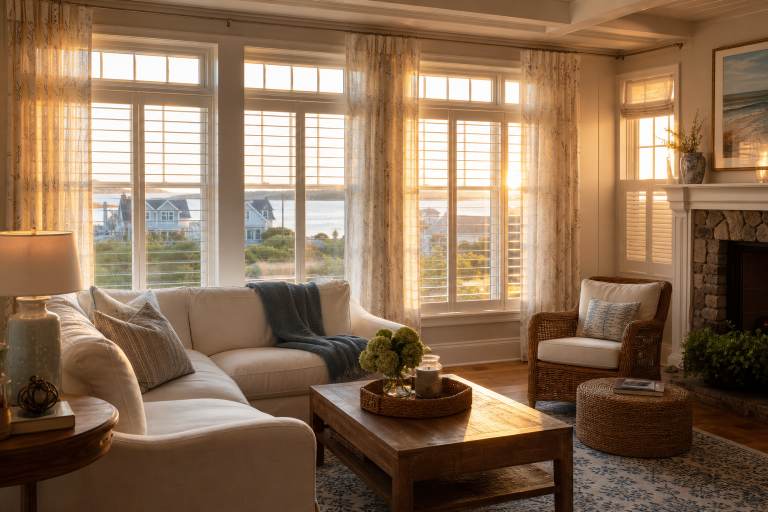
Choosing window treatments on the Seacoast of New Hampshire means planning for more than just a polished look. Coastal daylight, close-set neighborhoods, winter cold, and bright summer afternoons all affect what works best. Whether a louver will not stay in place or a panel needs attention, professional shutter repair The Seacoast (NH) can help restore the control and privacy your home needs.
The best option solves a specific daily problem. A living room may need glare reduction without blocking views, while a bedroom may need dependable darkness and nighttime privacy. Start with function, then narrow your choices by material, color, and style.
On the NH Seacoast, east-facing windows can bring early glare, while west-facing glass may collect strong late-day sun. Homes near busy streets, sidewalks, and neighboring properties also need a practical balance between natural light and privacy.
Before buying, treat each window as its own small project. Note where it faces, when the direct sun reaches it, whether it feels drafty, and how much mounting space is available around the trim. Oversized, arched, shallow, or sliding-door openings may limit which products fit well.
If worn louvers, broken tilt mechanisms, or panels that will not close are affecting your decision, searching for shutter repair near me may be more sensible than replacing a quality treatment that only needs service.
Why Function Matters More Than Style Alone
A beautiful fabric can still be frustrating if it reflects television glare, exposes a first-floor room after dark, or offers little protection against afternoon heat. Identify the main need first: controlling light, improving privacy, reducing heat transfer, preserving a view, or softening the room’s appearance. Then choose a treatment that supports that priority without creating a new inconvenience.
How To Assess Each Window
- Check whether the window faces north, south, east, or west.
- Watch the light from morning through evening for several days.
- Notice heat, drafts, screen glare, fading, and exposure to neighbors.
- Measure the glass, frame, trim, depth, and available mounting area.
- Record unusual features such as cranks, handles, arches, or sliding panels.
Choosing Light Control and Privacy
Light control generally falls into five useful levels. Sheers soften sunlight while keeping a room bright. Light-filtering shades reduce glare. Room-darkening materials help bedrooms and media spaces. Blackout products limit the most light for shift workers, nurseries, and sleep-sensitive households. Adjustable blind or shutter slats let you redirect sunlight while retaining some view.
Privacy changes from day to night. A sheer may obscure the view inward during daylight, yet offer little protection once interior lights are on. Bathrooms, bedrooms, and street-facing rooms often need opaque material, shutters, or layered treatments. Top-down/bottom-up shades are especially useful when you want daylight from above while covering the lower portion of a window.
Window Treatments and Energy Efficiency for Seacoast Homes
Winter winds and humid summer days make temperature control a meaningful consideration in Seacoast homes. Cellular shades create air pockets near the glass, lined drapery adds another layer, and shutters can provide a more substantial barrier when closed. The Department of Energy explains how window efficiency basics, such as glazing, frames, and solar heat gain, affect overall comfort.
Use the treatment at the right time. Close insulating products on cold nights, and close shades or angle slats before direct summer sun overheats the room. Coverings can support comfort, but they cannot replace damaged weatherstripping, major air-leak repairs, or failed window seals.
Blinds, Shades, Shutters, and Drapery Compared
- Blinds: Adjustable slats provide flexible light direction and a structured appearance.
- Roller and solar shades: Slim, simple choices for glare control, with solar fabrics helping preserve views.
- Cellular shades: A strong option when insulation and soft light are priorities.
- Roman shades: Add fabric texture and a tailored look, with lining available for greater darkness.
- Shutters: Durable, architectural coverings with excellent light-control options.
- Drapery: Adds softness, can absorb some sound, and works well as a layer over shades or blinds.
Room-by-Room Recommendations
Bedrooms benefit from room-darkening or blackout shades, plus side panels if light gaps are a concern. Living rooms often work well with solar shades, shutters, or layered drapery that protects views. In a home office, choose adjustable slats or solar fabric to reduce monitor glare without dimming the room.
Kitchens and bathrooms need moisture-resistant, easy-clean materials such as faux wood, vinyl, or certain roller shades. Children’s rooms should prioritize cordless operation and secure installation. For sliding doors, vertical blinds, panel-track systems, or drapery can cover wide glass while preserving access.
When Smart Controls, Safety, and Maintenance Make Sense
Motorized treatments are useful for tall, difficult-to-reach, or frequently adjusted windows. Timers can open shades for morning light, lower them before afternoon heat, and restore evening privacy. Manual products remain a practical value for accessible windows that rarely change position.
Choose cordless designs when children or pets are present, and ensure brackets and hardware are securely mounted. Dust blinds and shutters regularly, vacuum fabric shades gently with a brush attachment, and follow manufacturer guidance for spot cleaning. If a treatment sticks, sags, tilts unevenly, or makes unusual sounds, inspect the moving parts instead of forcing it.
A Simple Buying Checklist
- Write down the main problem at each window.
- Choose the needed daytime and nighttime privacy level.
- Select sheer, filtering, room-darkening, blackout, or adjustable light control.
- Match materials to moisture, cleaning needs, and daily wear.
- Consider exposure, insulation needs, and mounting measurements.
- Confirm child-safety features and decide whether automation adds value.
- Request samples and compare total product, installation, and maintenance costs.
Are Blinds or Shades Better for Privacy?
Either can work well. Shades depend on opacity and fit, while blinds add adjustable slat control. The best choice depends on whether privacy is needed all day, only at night, or only at certain windows.
What Works Best for West-Facing Windows?
Solar shades, cellular shades, shutters, lined drapery, and layered combinations can all help manage intense afternoon sun. The ideal choice depends on whether preserving the view or maximizing darkness matters most.
Should Every Room Use the Same Treatment?
No. A shared color palette can create continuity, but different rooms need different opacities, materials, and operating styles. Window coverings offer many functional options for managing sunlight, privacy, insulation, and decoration, as this overview of window-covering types illustrates.
