
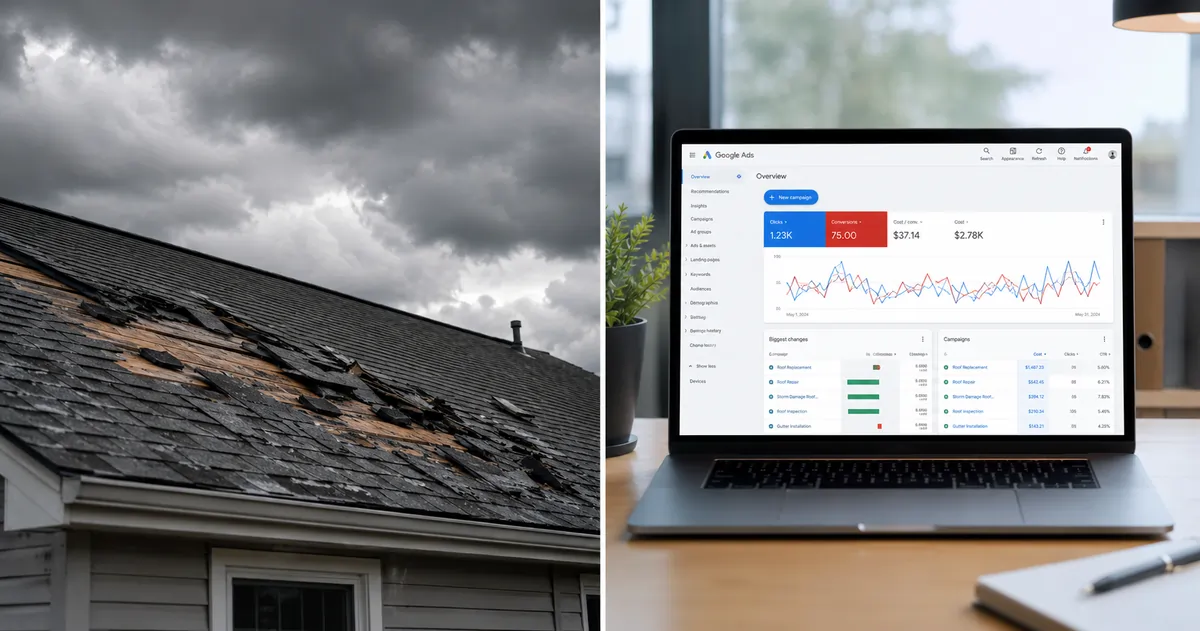
Google Ads can help roofing contractors appear in front of homeowners at the exact moment they are searching for repairs, inspections, replacements, or other roofing services. While clicks are an important campaign metric, they provide only a small part of the overall performance picture. A campaign can generate hundreds of clicks without delivering enough qualified enquiries or profitable roofing projects.
For this reason, roofing contractors should evaluate advertising performance using metrics that connect marketing activity with genuine business results. Looking beyond clicks can reveal where advertising budgets are producing value and where campaigns need improvement.
Qualified Leads From Advertising
One of the most useful metrics is the number of qualified leads generated by a campaign. Someone clicking an advertisement does not necessarily mean that person needs roofing services. Some visitors may be researching prices, looking for employment, or searching for information unrelated to hiring a contractor.
Contractors should therefore track phone calls, enquiry forms, quote requests, and appointment bookings that come from paid advertising. More importantly, they should determine how many of those enquiries represent genuine potential customers.
Tracking qualified leads provides a clearer indication of campaign effectiveness than measuring traffic alone.
Cost Per Qualified Lead
Advertising costs become easier to evaluate when contractors understand how much they are spending to acquire each meaningful opportunity. Cost per click shows what a business pays for website traffic, while cost per qualified lead provides greater insight into whether that traffic has commercial value.
For example, inexpensive clicks are not particularly valuable when visitors rarely contact the company. A campaign with a higher click cost may actually perform better if those visitors regularly become qualified roofing leads.
When evaluating Google Ads for roofing, contractors should therefore connect advertising expenditure with the quality and quantity of opportunities being created.
Conversion Rate of Landing Pages
The page visitors reach after clicking an advertisement can significantly influence campaign performance. A landing page should make it easy for potential customers to understand the roofing services offered and take the next step.
Contractors can monitor the percentage of visitors who complete important actions, such as requesting an estimate, submitting a contact form, or making a phone call.
A low conversion rate may indicate problems with page speed, messaging, navigation, mobile usability, or calls to action. Improving these elements can sometimes generate additional leads without increasing the advertising budget.
Phone Call Quality
Roofing businesses often receive a substantial portion of their enquiries by phone. Simply counting calls, however, may create an inaccurate picture of advertising performance.
Contractors should consider call quality. Useful factors include call duration, customer intent, requested service, and whether the caller is located within the company’s service area.
This information can reveal which campaigns and search terms are attracting homeowners who are genuinely interested in roofing work.
Quote and Appointment Rates
A qualified enquiry is valuable, but contractors should also examine what happens after the initial contact. Tracking how many leads progress to inspections, appointments, or formal quotes provides additional insight into lead quality.
If an advertising campaign generates many enquiries but very few inspection bookings, there may be a mismatch between the advertisement and customer expectations. Alternatively, the business may need to review its internal lead handling process.
Connecting marketing data with sales activity makes it easier to identify where potential customers are being lost.
Jobs Won and Customer Acquisition Cost
Ultimately, roofing contractors need paying customers rather than clicks. Tracking the number of advertised leads that become completed projects creates a much stronger measure of campaign success.
Customer acquisition cost can be calculated by comparing advertising expenditure with the number of customers gained through those campaigns. Contractors can then evaluate whether acquisition costs make financial sense relative to average project values and profit margins.
A roof replacement, for example, may justify a significantly higher acquisition cost than a small repair. Looking at different service categories separately can therefore provide more meaningful information.
Revenue Generated From Advertising
Revenue attribution takes performance measurement another step further. Instead of asking how many clicks or leads an advertisement generated, contractors can examine how much actual business resulted from those leads.
This helps distinguish between campaigns that generate numerous small enquiries and campaigns that produce fewer but more valuable projects.
Conclusion
Clicks can indicate whether roofing advertisements are attracting attention, but they should never be treated as the primary measure of success. Qualified leads, conversion rates, phone call quality, appointments, quotes, jobs won, acquisition costs, and revenue provide a much more complete picture.
By connecting advertising data with actual sales outcomes, roofing contractors can make better budget decisions and identify the campaigns that contribute most effectively to sustainable business growth.
